

Café · Brooklyn · ⭐ 9.5/10 · 1404 reviews · updated: 2026-08-10 16:26:33
Address: 725 Fulton St, Brooklyn, NY 11217, United States
Coffee reached the rest of the world through a Yemeni port called Mocha, and the name of that port is still the word half the planet uses for a chocolate coffee drink. Moka & Co is a Fort Greene café built to put the original meaning back into it: Yemeni beans, Yemeni brewing traditions, Yemeni pastry, and a room that stays open into the night without serving a drop of alcohol.
Highlights
- A Yemeni specialty café rather than a café that happens to sell one Yemeni drink — the brew bar, the spiced traditional preparations and the pastry case all come from the same culture.
- Adeni chai, the black tea brewed with cream and cardamom named after the port of Aden, is the house signature and the drink most people are sent here for.
- Honeycomb bread — the pull-apart pastry of small dough spheres baked in a round pan and glossed with syrup — sits at the center of the food offer.
- The room stays open late, and later still at the end of the week, which makes it one of the few genuinely alcohol-free evening places in the neighborhood.
- The beans come from Yemen’s terraced highland farms, handpicked and sun-dried by methods that predate the entire specialty industry.
- Part of a small family of cafés with locations in New York and Michigan, the two centers of the Yemeni-American coffee house movement.
What’s in the cup
Yemen is where cultivated coffee first became a commodity, and Yemeni coffee is still farmed differently from almost anywhere else: tiny terraced plots cut into steep highland slopes, no irrigation to speak of, fruit dried whole in the sun on rooftops, and knowledge passed down inside families rather than learned from an agronomy course. The result is a distinctive cup — dried fruit, spice, a winey depth, a heaviness that has nothing to do with dark roasting. It is also one of the scarcest coffees in the world, which is why most New Yorkers have never tasted it despite drinking coffee every day of their lives.
The menu here is organized around that heritage rather than around the Italian espresso canon, and the traditional side is the interesting half. Yemeni preparations are spiced by default, brewed rather than pressured, and served in a way that assumes you are staying rather than running: cardamom, ginger and cinnamon do work that syrup does elsewhere. Adeni chai is the gateway — strong black tea cooked with cream and cardamom until it is closer to a dessert than a tea — and beside it sit the mufawar-style traditional brews that give the counter its identity.
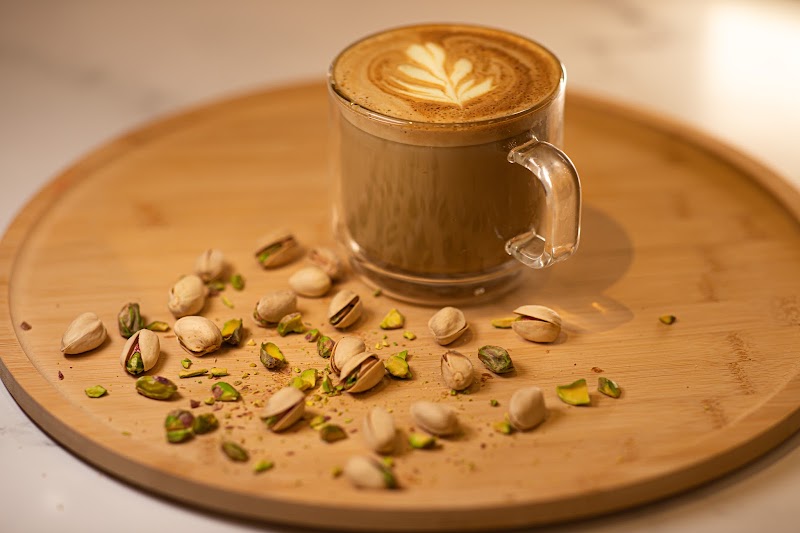
The espresso bar exists and does its job, with signature and matcha lattes, refreshers and frozen drinks for the part of the room that wants a familiar order. That is worth saying plainly: this is a heritage café with a broad, approachable, sweet-leaning drinks list, not a minimalist roastery bar with a rotating list of washed microlots and a scale on the counter. If you arrive expecting a Nordic filter program you will be in the wrong room. If you arrive wanting to taste what coffee tasted like before Europe got involved, this is one of the very few counters in Brooklyn that can show you.
Who’s behind it
The people running the business keep themselves out of the story, and the honest thing to say is that there is very little public trace of who they are. What the company does say is that the founder built the café out of homesickness — for a place where anyone was welcome to sit — and that the mission is to connect Yemen’s coffee past to something better in its future. That is not a marketing abstraction in this case: Yemen’s coffee farmers have spent a decade trying to keep terraces productive through a war, and cafés like this one are a meaningful part of the export demand keeping that possible.
The wider context matters too. The Yemeni coffee house format was built in Arab-American Detroit and traveled outward from there; this business has grown along exactly that route, with cafés in New York and in Michigan and a franchising program behind it. The Fort Greene room arrived in 2024, part of a wave of Yemeni cafés opening across the city, and it works like the others in that wave: a big, calm, alcohol-free room that treats sitting for hours as the point rather than a problem.
What it’s for
The strongest reason to know about this place is the evening. New York is not short of cafés, but it is dramatically short of rooms where you can sit with four friends late in the day, order something that took effort to make, talk without shouting over music, and never once be asked whether anyone wants a drink. That is the whole proposition of the Yemeni café format and the reason it has spread so fast — young Muslims, anyone not drinking, and increasingly everyone else has found in it a third place that the bar and the take-out coffee counter had both stopped providing.
By day it is a straightforward work café. There is Wi-Fi, the room is spacious enough to spread out, the volume is moderate, and nobody is counting the minutes since your last order. The seating is roomy rather than the tight two-tops of a takeaway shop, which makes it comfortable for a long session and equally comfortable for two people talking over a pot. Takeaway works fine and there is an app with ordering and a loyalty scheme for regulars. The one thing it is not built for is a rushed espresso and out — the traditional drinks take time, deliberately, and if you are in a hurry you should order from the espresso side of the counter.
The space
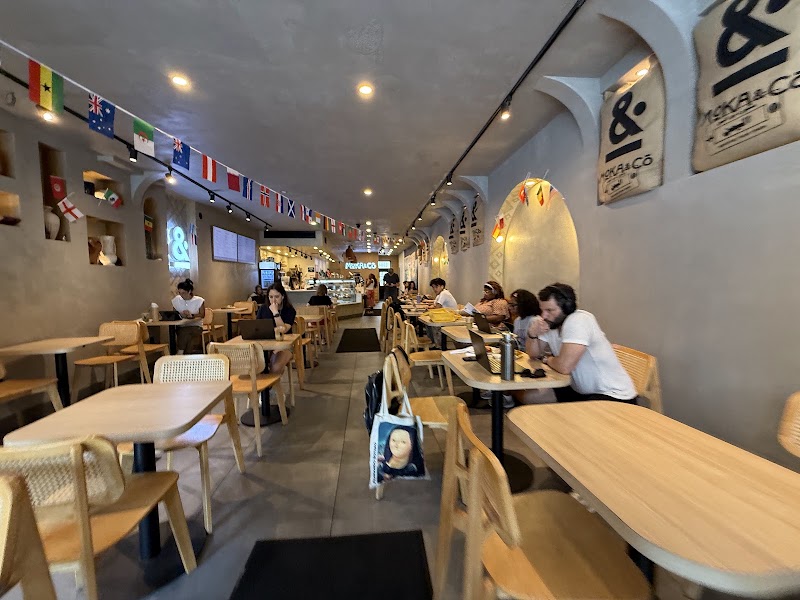
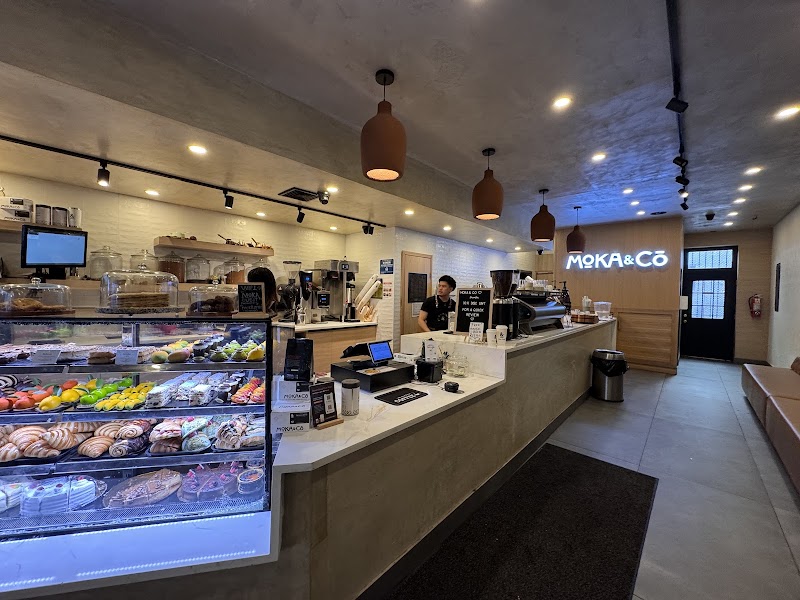
A large, calm, uncluttered room, notably more spacious than the average Brooklyn café of the same footprint feels, with enough seating that finding a table is usually not a fight. It runs quieter than the volume of a bar and softer than the clatter of a brunch room — conversation carries at normal levels, which is the whole design intent. The look is contemporary rather than themed: no forced folkloric decor, with the Yemeni identity carried by what is on the counter rather than by what is on the walls. It is the kind of room that fills up gradually in the evening and stays busy in an unhurried way, with groups sitting far longer than a café would normally accommodate.
Beyond coffee
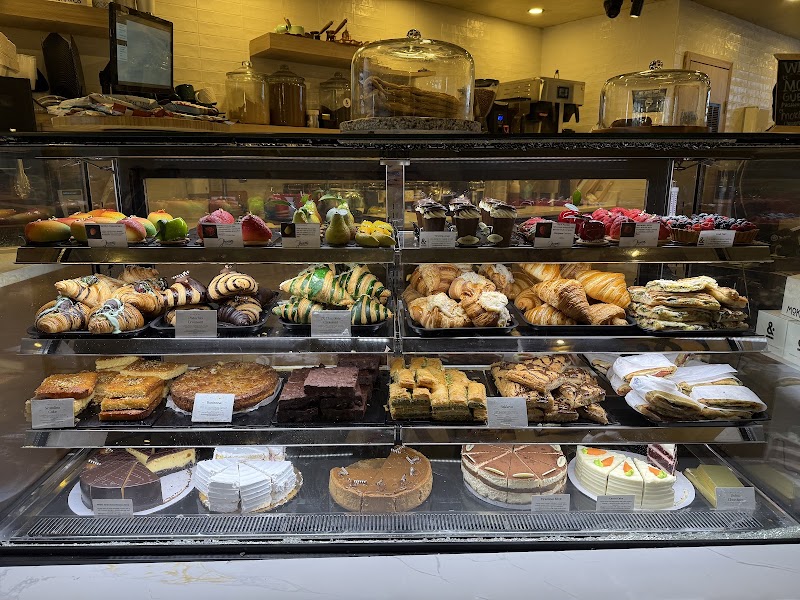
The pastry case is the second reason people come, and it is Yemeni rather than French. Honeycomb bread is the emblem — a round pan of soft dough spheres, often filled with cheese, brushed with syrup and pulled apart by hand at the table, which is a communal food by design. Sabaya, the layered buttery Yemeni pastry, appears alongside it, and there is a set of fusion sweets that bridge the two traditions, pistachio-based things among them. Croissants and the familiar Western case exist for the people who want them. This is a café where ordering food is normal rather than optional, and where much of what is on offer is meant to be shared across a table — which fits the way people use the room.
When to come
The doors open very early, before the working day, which makes it a genuine morning stop and not just an evening venue. The middle of the day is the calmest stretch and the best window for working. The room comes alive after dark: evenings are when the format makes sense, groups arrive, and the end of the week runs latest of all. If your plan is a long social evening without alcohol, this is the time to use it, and it is worth knowing that the later hours are exactly when a table for a group is hardest to get. If you are attending something in the neighborhood’s theaters or arenas, the café is functional both before and after, which very few cafés in the area are.
Getting there
The café sits in Fort Greene, on the main commercial spine that runs through the neighborhood, within a short walk of the Brooklyn Academy of Music and the Barclays Center. Lafayette Av on the C is essentially at the door; Clinton–Washington Avs on the G is a comparable walk from the east. The Atlantic Av and Barclays Center hub, with its long list of lines, puts you within about ten minutes on foot, which makes this an easy stop from almost anywhere in Brooklyn and from most of Manhattan. It is also a natural post-event destination, since the evening hours line up with the end of a show.
Good to know
Come understanding what the traditional drinks are. Adeni chai is rich and sweet by construction, not by adding sugar afterwards, and the spiced brews are meant to be sipped slowly. Someone expecting an unsweetened black filter will find the traditional side heavy; the espresso bar is the answer for that palate. The counter is happy to explain what everything is, and asking is the correct move on a first visit.
Two honest notes. The café is part of a growing chain rather than a one-off, and it is franchising, so the room will feel more like a well-built format than a singular independent — that is a fair trade for consistency, but it is worth knowing. And it is a place where people settle in for hours, which means that at peak evening hours you may wait for a table, especially with a group. If precision-brewed single-origin filter is your priority, this neighborhood and the ones around it have specialists for that; what this café has instead is a tradition, a late-evening room and a pastry case built for sharing.
Questions and answers
What is Yemeni coffee and how is it different?
It is coffee from small terraced farms in Yemen’s highlands, handpicked and dried whole in the sun by methods older than the modern coffee industry. The cup tends toward dried fruit, spice and a winey depth. It is scarce and rarely served in New York outside cafés like this one.
What should I order on a first visit?
Adeni chai, the cardamom-and-cream tea named for the port of Aden, and something from the honeycomb bread family to share. If you want coffee rather than tea, ask for the traditional spiced brew rather than an espresso drink.
Is it open late?
Yes — and that is one of the main reasons to know it. The room runs into the evening and runs latest at the end of the week, which makes it a rare alcohol-free option for a long night out in Fort Greene.
Is alcohol served?
No. This is an alcohol-free café by design, which is central to what the Yemeni coffee house format offers.
Can I work here?
Yes. There is Wi-Fi, the room is spacious and the noise level is moderate. Weekday middays are the calmest working window; evenings turn social.
What is honeycomb bread?
A round pan of small soft dough balls baked together and glazed with syrup, often filled with cheese, pulled apart by hand. It is meant to be shared across a table rather than eaten alone.
Is this a chain?
It is a small and growing one, with cafés in New York and Michigan and a franchising program. Michigan matters here: the Yemeni coffee house format spread outward from the Arab-American communities of the Detroit area.
Is it good before or after an event nearby?
Yes, it is one of the few options in the neighborhood that works at both ends of an evening — the academy of music and the arena are both a short walk away, and the café is still open when the show lets out.
Opening hours
| Day | Hours |
|---|---|
| Monday | 06:00–21:00 |
| Tuesday | 06:00–21:00 |
| Wednesday | 06:00–21:00 |
| Thursday | 06:00–21:00 |
| Friday | 06:00–23:00 |
| Saturday | 06:00–23:00 |
| Sunday | 07:00–21:00 |
Photos
Visitor reviews
Reviews last updated: 2026-08-10 16:26:33
Data is refreshed monthly. Sources: brooklynka.com and editorial picks based on reviews.
Крижаний Адені Чай, дуже сподобався! Саме те, що мені було потрібно, щоб пережити спеку. Це таке миле та ідеальне місце для роботи. Я рада, що знайшла це місце.
Ая була винятковою та приготувала один з найкращих кортадо, які я коли-небудь куштував. Кава була ідеально збалансованою, ніжною та приготованою з великою увагою до деталей. Привітне обслуговування, професійне ставлення…
«Moka & Co» – одне з найкращих кафе в цьому районі. Атмосфера тут спокійна та комфортна, не надто галасливо чи людно, тож ви можете насолодитися часом, проведеним там. Кава справді смачна, але я постійно думаю про випічк…
Така чудова кав'ярня! Кава смачна, випічки дуже багато — важко вибрати щось одне. Всередині затишно та просторо, ідеально підходить для того, щоб посидіти та насолодитися напоєм. Персонал дуже доброзичливий і привітний.…
Супер мила кав'ярня! Є місця для сидіння та Wi-Fi. Взяла каву та круасан, вони були справді смачні, але я заплатила за обидва 15 доларів. Тож трохи завищена ціна.