
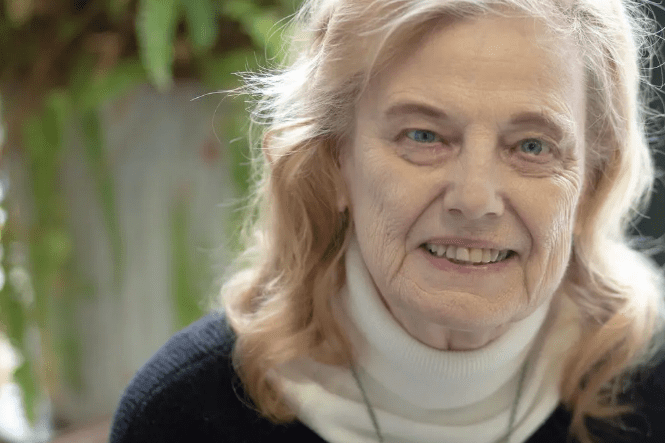
This woman is well-known in Brooklyn. She has been referred to as an apostate nun, activist, organization leader and informant in a sexual assault scandal. Brooklynka will tell you more about it.
Who was Sister Glose?
She was born on December 1, 1946, to Slovak immigrant descendants. The parents of Georgianna Inez Glose were apartment building supervisors who resided in Queens. At the age of five, the girl contracted polio. She had to learn to walk and restore her fundamental abilities. As a result, Glose learned a valuable lesson: never let physical issues slow her down.
Georgianna Glose graduated from high school and then joined the Dominican order. She attended Molloy College in Rockville Center, where she majored in philosophy.
She then taught Catholic schoolchildren. During this time, there was a women’s liberation movement and there were very few American priests. Sister Glose then was ready to take over pastoral duties. So she did, it was an unusual experiment since, in the early 1970s, she and two other sisters were appointed to St. Michaels-St. Edward to help perform pastoral duties. This was exceptional since the effort required a shift from traditional work, specifically from teaching. The church was constructed in 1891. However, modern residents of Brooklyn can no longer see it since the structure is not visible.
In 1969, she left the monastery in Fort Greene to join St. Michaels-St. Edward Church. In addition to serving, she did not abandon her studies. For example, her next educational move was to get a master’s degree at Hunter College and a PhD in social welfare at City University of New York. Her dissertation addressed institutional racism. This is an issue that African-American Catholic nuns frequently face.
All of these enabled Georgianna Glose to reach incredible success. In fact, she was named chair of the Human Services Department at New York City College of Technology, as well as head of a national human services consortium.
Scandal
Sister Glose and two other nun sisters informed the diocese about the priest’s suspected abuse of minors. Later, the charges were made public, and informants, including sister Glose, were caught up in the middle of the scandal. She accomplished something most people would never have dared to do: she revealed sexual assault within the walls of the Catholic Church.
Sister Glose described it as one of the darkest experiences of her life. In 1993, she and Sister Butler discovered that priests from their parish had sexually assaulted children. It was a painful blow.
In 1996, three nuns (together with sister Glose) made a public statement regarding what happened. According to them, teenage boys in Fort Greene Parish were sexually molested. In reaction to this information, the Diocese of Brooklyn, led by Bishop Thomas V. Daily, stated that their response would be serious and strong.
After the charges were filed, only one priest admitted to molesting a child. The diocese ordered him to cease his parish duties. He relocated to Florida and could no longer work as a priest.
The issue was that no one informed either the nuns or the victim. Law enforcement agencies were also not involved in the process. The incident left a painful mark, widening the gap between diocese representatives and nuns. The tension amongst the church representatives only increased.
One of the victims, Carlos Cruz, still does not want an apology and does not plan to file a lawsuit. He has a family and a job, yet he still suffers from depression, insomnia, anxiety and panic attacks.
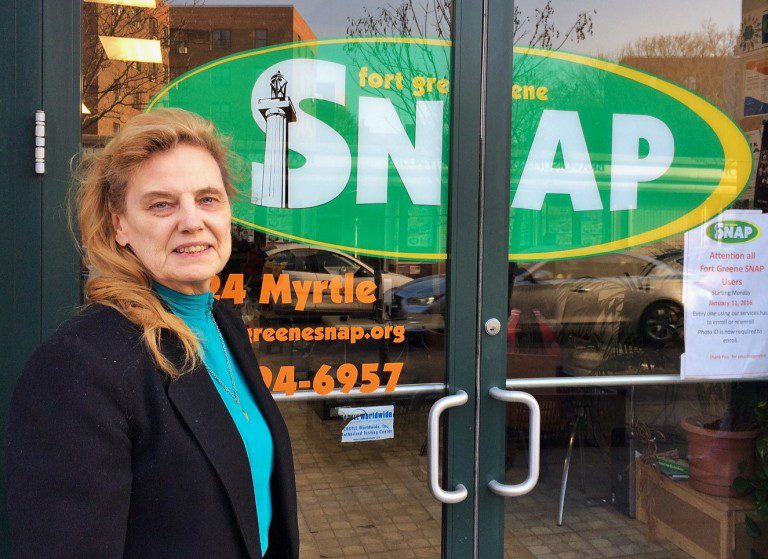
Non-profit organization offering assistance in the Fort Greene neighborhood
The woman was well-known among Brooklyn residents. She left her monastery, St. Dominic of Amityville, to live among the poor. Homeless people received help from the Fort Greene Strategic Neighborhood Action Partnership. Georgianna Glose ran the organization, and the homeless referred to her not as a nun, but as Dr. Glose, because the woman had a PhD. Those who could have sought shelter here included:
- mothers on social welfare
- parents on parole
- grandparents caring for their grandchildren.
At sister Glose’s shelter, you could eat delicious food, celebrate Thanksgiving with a turkey, join support groups and take computer literacy classes. The organization’s website has a section titled “In Memorium 04.28.2020” that honors Georgianna Glose, the leader of the Fort Greene community.
The charity was created in 1996 to support the vital needs of citizens and is located at 324 Myrtle Ave., Brooklyn, NY 11205. It addresses four issues: adequate housing, education, economic development and affordable medicine.
Revitalization Project
In the 1990s, the woman became one of the founders of the Myrtle Avenue Revitalization Project (also known as MARP), on which she worked for over 20 years. With it, she instilled one of the most fundamental values: caring.
Thanks to its daily work and successful leadership, MARP became a public organization.
The memory of Sister Glose
Sister Glose died on April 28, at the age of 73. She died at Brooklyn Hospital Center from coronavirus complications. She is recognized as a compassionate and dedicated person whose impact extended well beyond the community she built.