

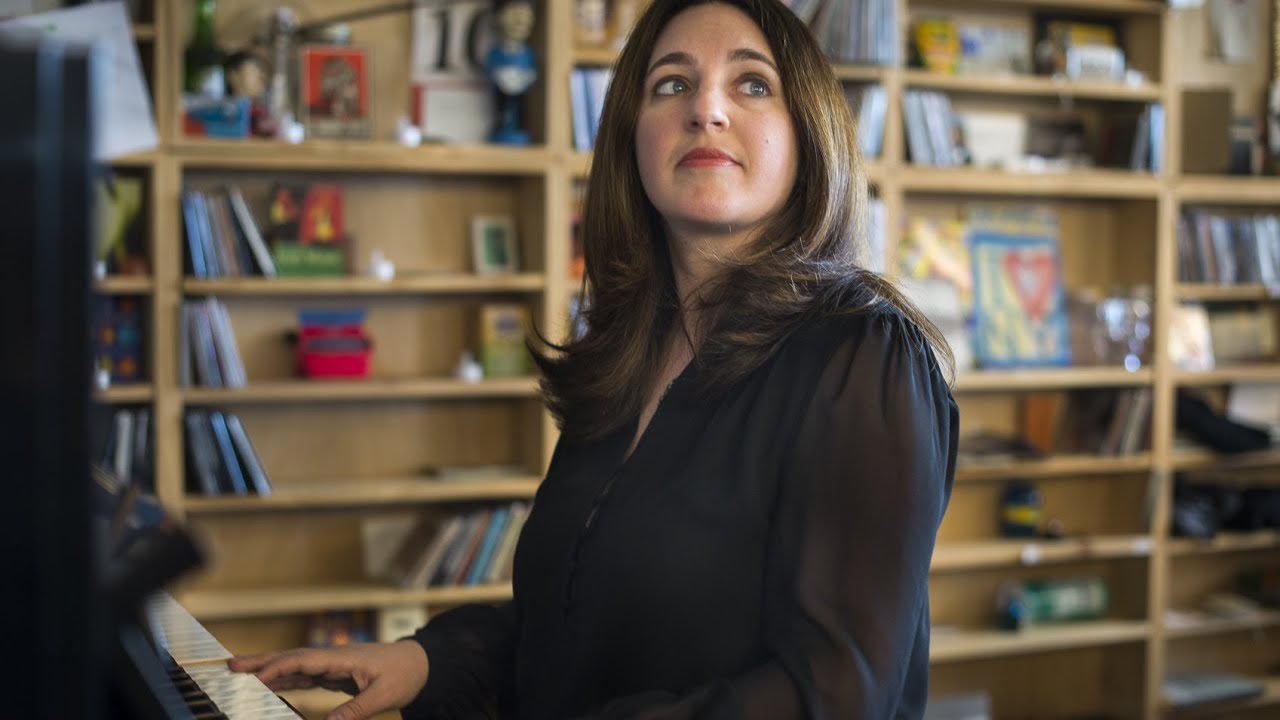
Everyone has their own path to success. In the case of pianist Simone Dinnerstein, her journey feels like a fairy tale. She made her debut in 2005, and her star has been shining ever since. Read more about this famous Brooklyn pianist on brooklynka.
Early Life and Inspiration
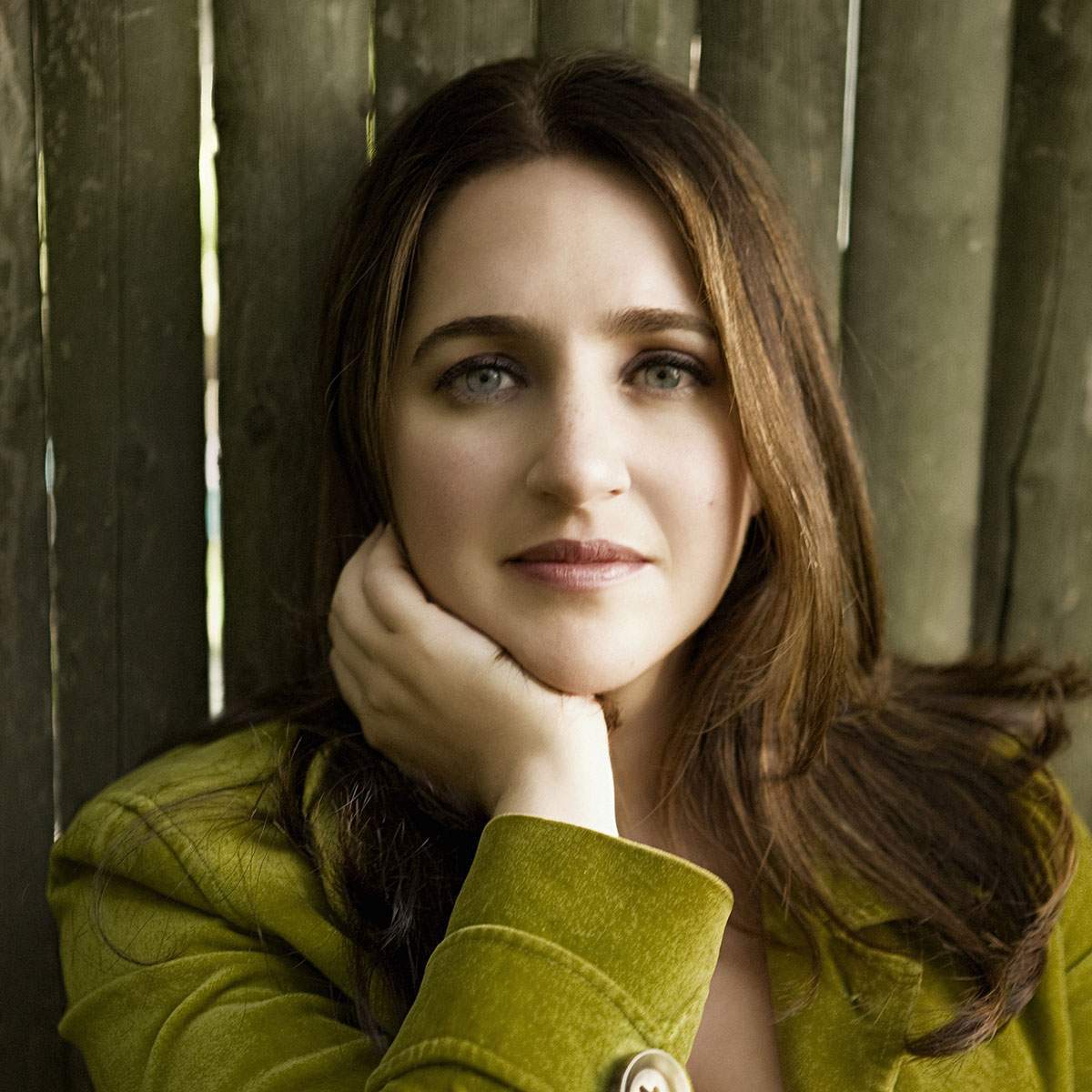
Simone Dinnerstein was born and raised in Brooklyn, New York. She often speaks about how her father, Simon Dinnerstein, was her source of inspiration. He was a passionate and uncompromising artist, dedicated to his craft. At 29, he completed a 14-foot-wide triptych, which is now housed at the University of Pennsylvania. Simone recalls that her father’s words about art resonated deeply with how she thought and felt about music.
She started playing the piano in school and, at 20, studied for three years under Peter Serkin, who had also been influenced by Glenn Gould. During this period, she played Bach’s music with Serkin, which helped her explore and reinterpret Bach’s compositions in a new light.
For many years, she performed at small concert venues and community centers. One of her most memorable performances was at a medium-security prison, where she helped raise $15,000. Another defining moment in her early career was when she independently produced a recording of Bach’s “Goldberg Variations”, a bold move that would later prove to be a turning point in her career.
According to Simone, she never had a specific plan for her career—just a series of unexpected events where she made the right choices.
2005 Debut and Recognition
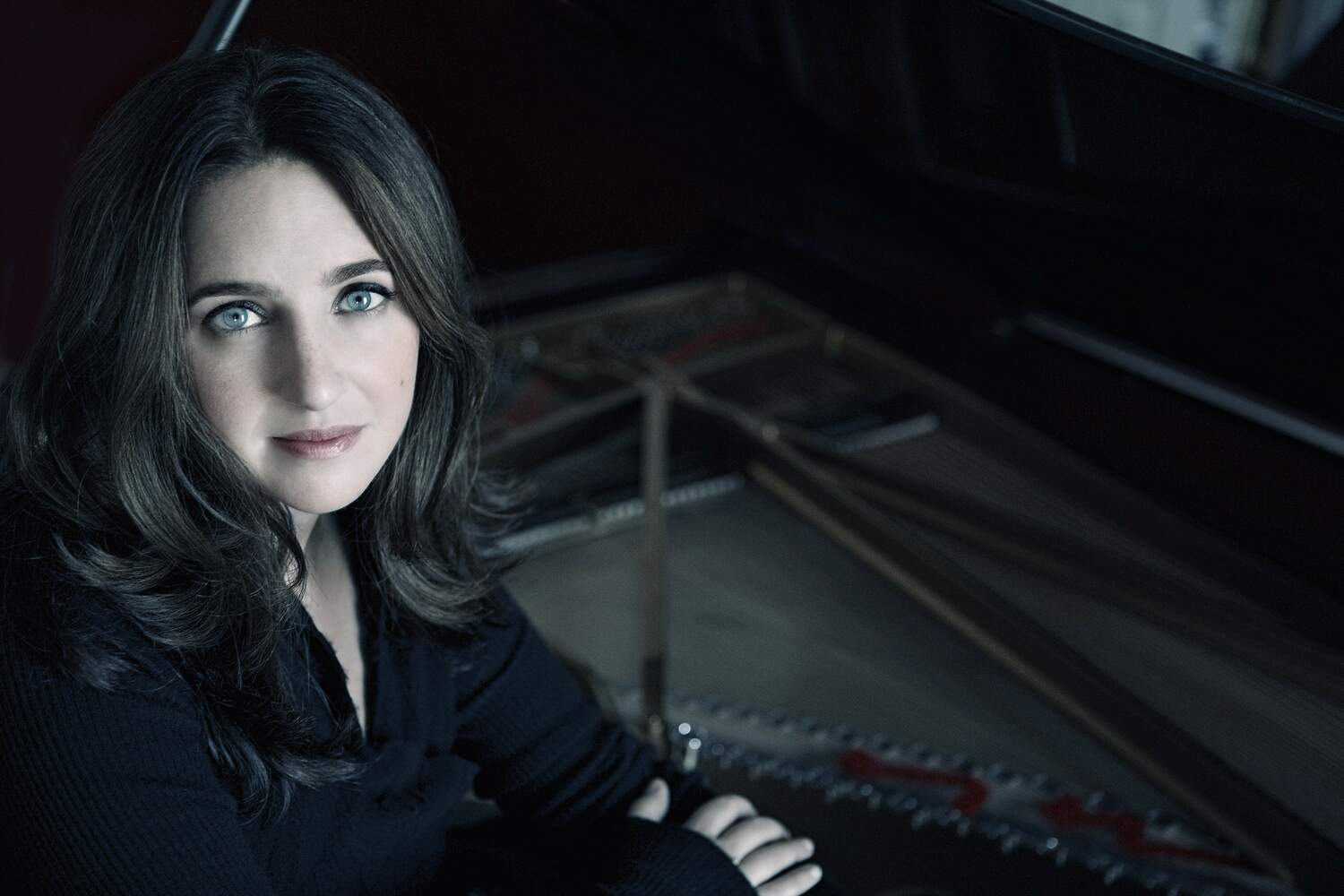
Simone Dinnerstein made her official debut in 2005 at Weill Recital Hall, part of Carnegie Hall. Her performance received outstanding reviews in The New York Times, cementing her as an artist to watch.
In 2007, Telarc released her version of “Goldberg Variations”. The road to this release was far from smooth. Many record labels rejected her proposal, including Telarc initially. The reason? A marketing executive at the label listened to the Aria and didn’t like it. Even the labels that appreciated her performance hesitated to take the financial risk.
At the time, the classical music industry was struggling—CD sales were declining, and recording companies relied on live performances for revenue. Simone knew that having a recording would help her secure more concert opportunities, but labels didn’t share the same vision. Despite these obstacles, Telarc eventually agreed to release her “Goldberg Variations” recording.
The year 2007 proved to be a breakthrough for Simone. She received instant international recognition—her album debuted at No. 1 on the Billboard Classical Chart in its first week and was later featured in multiple “Best of 2007” lists.
A Personal Connection to the “Goldberg Variations”
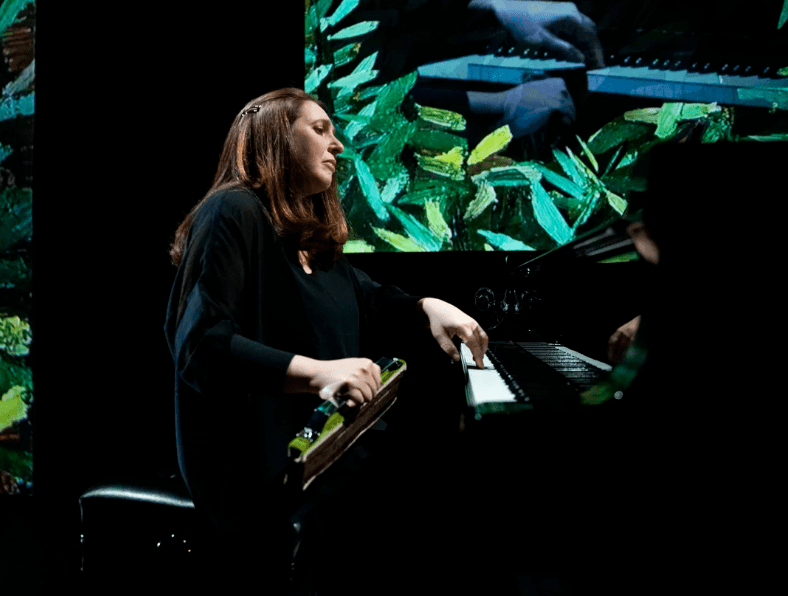
Simone first heard Bach’s “Goldberg Variations” at 13, while visiting a boy she had a crush on. The boy had a CD player, and in his room, Simone listened to the Aria for the first time. She recalls it as a transformative experience, stating that she had never heard anything more moving in her life.
Her decision to perform and record the “Goldberg Variations” became one of the most meaningful moments in her career. In an interview, she spoke about how she won an audition at Astral Artists, a Philadelphia-based organization that supports young musicians. The grand prize was a debut recital, where she could choose her own program.
One evening, after attending a concert, she and her husband were discussing what she should perform for her debut. It was during this conversation that she decided on “Goldberg Variations”. Originally, her plan was to record Glenn Gould’s interpretations, as both she and her husband admired his work.
Her preparation for the recital was prolonged because she gave birth to her son, Adrian. Even during her pregnancy, she continued practicing and refining her performance. When Adrian was still a baby, she practiced while caring for him.
Simone’s interpretation of the Aria was shaped by the piano she used—a Hamburg Steinway from 1903, known for its lyrical and expressive sound. As she worked through the piece, she experimented with various playing styles, eventually realizing that the music naturally unfolded in a certain order.
She once remarked that the greatest challenge for a musician is truly listening to what’s inside their own head. In her performance, she sought to avoid a constant pulse, instead embracing subtle tempo variations to allow for greater emotional expression.
A Notable Duet and Expanding Repertoire
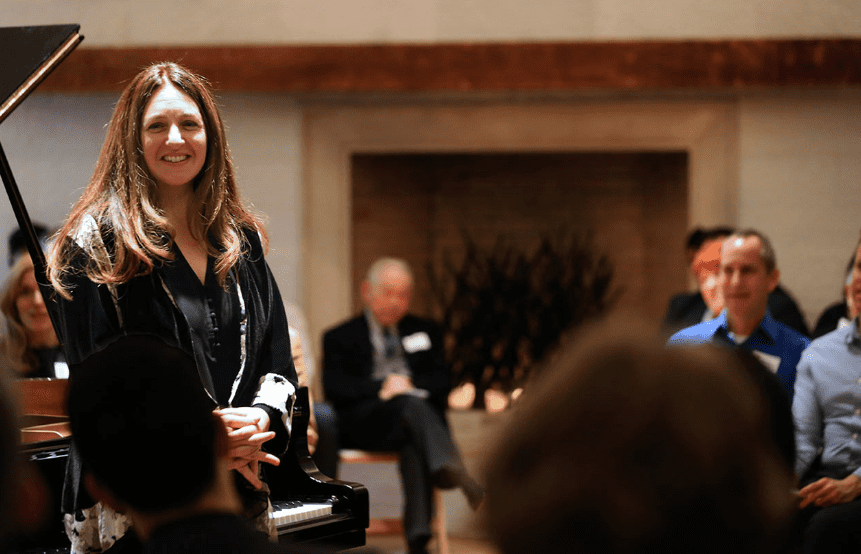
Simone Dinnerstein recorded the complete Beethoven works for piano and cello in a duet with Zuill Bailey. She performed to sold-out audiences at Lincoln Center and expressed satisfaction with her artistic growth. She noted that she had become bolder in her approach to timing and phrasing.
She has also performed in Vienna, played Bach’s C minor Concerto with the Frankfurt Radio Orchestra, and collaborated with the Minnesota and Atlanta Symphony Orchestras.
While Bach remains central to her artistic identity, her repertoire is not limited to Baroque music. She has also championed contemporary composers, including Philip Lasser.
Simone Dinnerstein and the Brooklyn Orchestra
In 2023, Simone performed with the Brooklyn Orchestra at Roulette Intermedium (509 Atlantic Avenue, Brooklyn). The concert, which began at 7:30 PM, lasted for an hour.
The program included the premiere of Philip Glass’s Symphony No. 14 and his Tyrol Concerto for Piano and Orchestra, featuring Simone as the Grammy-nominated soloist.
The Brooklyn Orchestra, founded in 2015, focuses on new music and supports contemporary composers. The ensemble, led by Olivier Glissant, aims to merge diverse musical genres that are rarely showcased in classical settings. This approach broadens the orchestral repertoire, making symphonic music more accessible to a wider audience.
A Dream for the Future
Simone dreams of establishing a foundation in New York that would enable musicians to bring concerts to local institutions such as hospitals and schools.
She has already taken steps in this direction by implementing a music program at a Brooklyn public school, where her son is a student. In a world where music surrounds us, she believes that change is possible.
Fascinating Thoughts on Music
Simone believes that a pianist should not focus on themselves but on the music itself. She is less interested in historical performance practices and more focused on what the music communicates.
When studying the “Goldberg Variations”, she is fascinated by Bach’s compositional techniques, which inspire her to reinterpret and breathe new life into the piece.
She also challenges the misconceptions surrounding Bach’s music. For years, many considered it dry, unemotional, and mathematical, but Simone disagrees. To her, Bach’s music is deeply expressive and infused with spiritual intensity. However, she emphasizes that interpreting Bach requires understanding his intentions, as otherwise, one can lose direction in his music.
Broad Musical Interests and Unique Projects
Simone has launched several innovative projects:
- The world premiere of “The Eye Is the First Circle” at Montclair State University, a multimedia performance she conceived, created, and directed, incorporating her father’s artwork.
- A performance of Richard Danielpour’s “American Mosaic” at Brooklyn’s Green-Wood Cemetery, dedicated to those affected by the pandemic.
- The “Bach-packing” project, where she visited school music classes, introducing students to Bach’s compositions.
- Her own ensemble, “Baroquelyn,” which she independently directs.
Simone Dinnerstein’s journey is a testament to determination, talent, and making the right choices at the right moments—proving that passion and persistence lead to remarkable success.